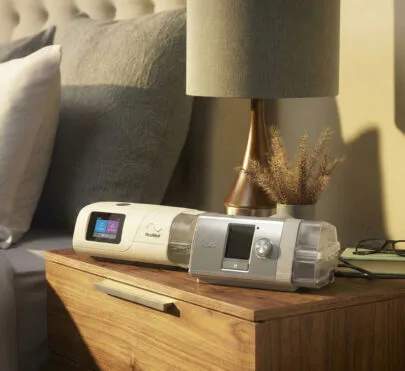
Advanced BiPAP Devices and Ventilator Options
A bilateral positive airway pressure (BiPAP) ventilator is a non-invasive breathing support device designed to assist patients with breathing difficulties. It delivers two levels of air pressure: higher pressure during inhalation (IPAP) and lower pressure during exhalation (EPAP).
This makes it particularly useful for individuals with conditions like sleep apnea, COPD, or other airflow-related issues. Unlike standard BiPAP machines, advanced BiPAP ventilators include features tailored for critical needs, such as advanced BiPAP algorithms and multiple pressure support modes.
Although continuous positive airway pressure (CPAP) machines are the most common method of treatment for sleep apnea, if you’re dealing with more complex conditions like central or mixed sleep apnea, a standard CPAP machine may not be sufficient.
Advanced BiPAP devices offer enhanced support with modes like BiPAP ASV for treatment-emergent central sleep apnea and BiPAP AVAPS for conditions such as obesity hypoventilation syndrome or congestive heart failure. Exploring the difference between a BiPAP ventilator vs BiPAP machine can help determine the right option for your specific needs.
This post explores why upgrading to advanced BiPAP therapy can be beneficial. We’ll cover indications, advanced algorithms, and options like the ResMed AirCurve series, including the AirCurve VAuto and AirCurve ASV. Whether you’re managing obstructive, central, or complex sleep apnea, we will explore the differences between BiPAP vs CPAP and ASV vs AVAPS to help you achieve restful nights and energized days.
What Sets Advanced BiPAP Devices Apart?
Think of your BiPAP machine as a smart breathing coach that adapts to your needs in real-time. Advanced BiPAP devices incorporate sophisticated algorithms, unlike standard models that stick to fixed inspiratory positive airway pressure (IPAP) and expiratory positive airway pressure (EPAP) levels.
For instance, BiPAP ASV (Adaptive Servo-Ventilation) targets complex breathing disruptions. It detects irregular breathing patterns and automatically adjusts pressure support to stabilize respiration and improve blood oxygen levels, particularly during events like Cheyne-Stokes respiration.
Similarly, BiPAP AVAPS (Average Volume Assured Pressure Support) ensures a target tidal volume by dynamically modifying IPAP within safe limits, to accommodate for irregular breathing patterns. It is ideal for fluctuating demands without having to worry about manual adjustments.
These devices come with comfort features such as backup respiratory rates for consistent ventilation, ramp times for smooth pressure transitions into sleep, and heated humidifiers with climate control to eliminate dry airways and rainout. Wireless connectivity allows real-time data tracking via apps, while advanced event detection differentiates obstructive from central apneas.
Quiet operation, leak compensation, and auto-adjusting comfort settings like C-Flex or Easy-Breathe allow BiPAP ventilators to mimic natural breathing.
Who Benefits from Advanced BiPAP Devices?
If you are intolerant to standard CPAP machines or traditional BiPAP therapy is insufficient for your breathing requirements, you could benefit from advanced sleep apnea ventilation therapy.
These devices are particularly beneficial for complex sleep apnea, central sleep apnea, or mixed sleep apnea. For example, patients with chronic obstructive pulmonary disease (COPD), obstructive pulmonary disease, or obesity hypoventilation syndrome benefit from AVAPS. This is because it can help to maintain steady ventilation despite challenges like stiff lungs or weight-related issues.
For those with treatment-emergent central sleep apnea, AirCurve ASV BiPAP modes adjust pressure support to normalize breathing patterns. Patients with congestive heart failure or other conditions affecting breathing also benefit from the stabilizing effects of these devices, reducing the effort required to breathe without invasive setups.
The results show the flexibility of advanced BiPAP therapy options, in addressing various respiratory challenges. They make long-term adherence easier and track progress, helping you to achieve better sleep health.
Top Advanced BiPAP Devices on the Market
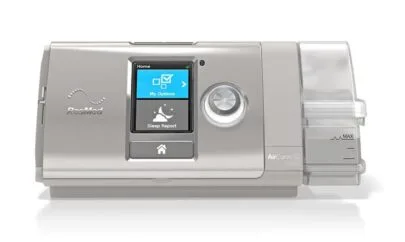
ResMed AirCurve 10 VAuto
The ResMed AirCurve 10 VAuto is a standout among advanced BiPAP devices designed for responsive BiPAP therapy. This device auto-adjusts both EPAP to address obstructions and IPAP for inhalation. Using ResMed’s exclusive AutoSet algorithm, it tailors therapy breath-by-breath to ensure optimal airway pressure, even as your needs fluctuate throughout the night.
The unique TiControl feature establishes minimum and maximum inspiratory time limits to sync with your natural breathing, reducing breath timing issues often experienced by individuals with COPD or neuromuscular conditions. The Easy-Breathe waveform and Vsync leak management provide seamless, natural-feeling support with precise trigger sensitivity for harmonious device-patient interaction.
When paired with the HumidAir and optional ClimateLineAir heated tube, the device automatically regulates humidity and temperature to prevent dryness or rainout. It also offers cloud connectivity through AirView or the myAir app, enabling remote monitoring and data insights.
Philips Respironics DreamStation BiPAP autoSV
If irregular breathing patterns disrupt your sleep, the Philips Respironics DreamStation BiPAP autoSV is a powerful solution for managing central sleep apnea and complex apnea. It combines auto-adjusting EPAP with variable PS to stabilize irregular breathing patterns, such as those caused by treatment-emergent central sleep apnea.
This compact, high-end BiPAP machine incorporates Flex technology for comfortable exhalation, heated tubing with humidification to enhance therapy tolerance, and advanced algorithms that identify apnea types for targeted responses. Its servo-ventilation feature learns your baseline breathing and proactively counters deviations. Additional features include EZ-Start for gradual pressure ramping, integrated heated humidifier options, and wireless data tracking for healthcare providers.
The DreamStation is a reliable choice for advanced BiPAP therapy in home settings, providing uninterrupted, all-night reliability.
Advanced BiPAP vs. Other Sleep Therapy Devices
Advanced BiPAP vs. Standard CPAP
CPAP machines provide a single, constant positive airway pressure throughout your entire breathing cycle—both inhale and exhale receive the same pressure. It is ideal for the management of simple OSA. However, exhaling against constant pressure can become uncomfortable, particularly at higher settings. This is where advanced BiPAP devices excel by offering bilevel positive airway pressure with separate IPAP (inhalation) and EPAP (exhalation) levels.
The difference in comfort is significant: BiPAP’s lower exhalation pressure is similar to natural breathing, reducing the “fighting the machine” sensation. For individuals requiring pressures of 15 cm H₂O or higher, transitioning from CPAP to BiPAP therapy can greatly improve tolerance and adherence.
While CPAP machines are simpler to operate and less expensive initially, advanced BiPAP machines offer enhanced features such as auto-adjusting algorithms, pressure support modes, and servo-ventilation.
These features make BiPAP indispensable for managing complex sleep apnea, central sleep apnea, and respiratory conditions like COPD. Your healthcare provider will help decide which is the most suitable option for you and explain how advanced BiPAP features can ensure efficient, comfortable therapy with long-term compliance.
Benefits of Switching to Advanced BiPAP Therapy
If standard therapy hasn’t worked for you, upgrading to advanced BiPAP devices can be life-changing. This is because patient studies show that comfort promotes compliance. This means that when your mask feels comfortable and your breathing flows naturally, you’re more likely to use the device rather than abandoning it in frustration.
Unlike CPAP therapy, advanced BiPAP therapy allows healthcare providers to fine-tune pressure settings. This is done using personalized algorithms that automatically adapt to nightly changes in airway resistance, muscle tone, and sleeping position.
Advanced BiPAP devices offer targeted solutions for specific conditions. If you have congestive heart failure, obesity hypoventilation syndrome, or drug-resistant hypertension, BiPAP modes like ASV or AVAPS can address your unique needs. This can lead to improvements not just in sleep but also in cardiovascular and respiratory health.
Another advantage is wireless monitoring via apps, which allows you and your doctor to track therapy data in real time. This enables early issue detection and remote adjustments to settings, increasing the likelihood of success and enhancing your quality of life.
High-end BiPAP machines come with higher upfront costs and often require insurance approval to demonstrate CPAP ineffectiveness. However the long-term benefits, including better sleep, fewer health complications, and renewed energy make it worthwhile. Understanding when to upgrade BiPAP machine setups can ensure you’re maximizing your therapy potential.
Talk to Your Healthcare Provider
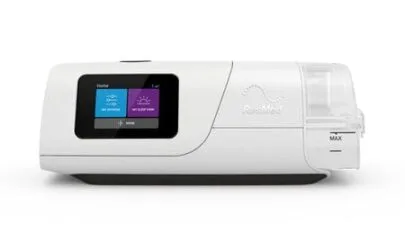
Advanced BiPAP devices like the ResMed AirCurve models are exceptional for addressing complex sleep apnea, central sleep apnea, COPD, and heart failure. These devices provide adaptive pressure support, enhanced comfort compared to CPAP machines, and use real-time algorithms to improve oxygen levels and sleep quality. Exploring the various BiPAP ventilator features and advanced BiPAP algorithms ensures you make an informed decision about high-level sleep apnea therapy options. This results in reduced fatigue, lower heart risks, and decreased need for intubation. If standard CPAP or BiPAP therapy isn’t effective, upgrading to BiPAP ASV or AVAPS could significantly improve your sleep experience.
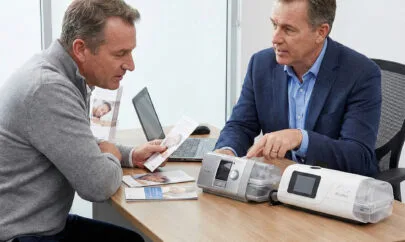
Speak to your healthcare provider today to schedule a sleep study, determine personalized pressure settings, and embark on a journey toward restorative sleep and better health.